Nothing remains quite the same, sang Jimmy Buffett. 2026 has heralded some major changes and the start of the year is bringing constant changes in latitude, the question is, will it bring about a shift in attitudes? Read on in the Reflections section…..
Uncategorized
Degrees of freedom
I promise there’s no reference to William Wallace! What is freedom of the sea? What are we escaping from, or put another way, what might we be escaping to? Confused….. don’t be, but jump over to the Sea: Reflections section and check out the latest post.
Of Fathers and Sons
I’ve recently completed Kennedy Warne’s Soundings where he describes rowing out to a family boat with his 92-year-old father. He starts the book tracing his intergenerational connection to the sea and boats and it got me thinking….. Thinking about fathers and sons, adventures, of losses and gains, of conflict and harmony. There are some great books in this vein, and here I touch on a few; My Old Man and the Sea, One Wild Song, The Boy who Fell to Shore. Go to the Reflections section if you want to know more.


Unexpected adventures in the galley: Learning through simple tasks
It’s the third evening on a five-day voyage with a group of year ten boys from a ‘well-to-do’ school. The dishes were rinsed in salt water and then sent below to be washed, dried, and …. To read more go to the Reflections section
Casting off the lines
A voyage isn’t necessarily about covering distance – it can be a way to gain understanding; so writes Paul Heiney in One Wild Song. This year has certainly been a journey in many ways and has provided a fresh perspective on how 2025 might shape up…… see more in the Reflections section.
The challenge of words
Joseph Heller, Sterling Hayden, and Jimmy Carr ….. how on earth do those three feed into this month’s piece? Check out the Reflections page……
Refreshed sections
I have recently refreshed the main sections of the website. I have combined my outdoor education and blue space academic writing into one section, added some material on my work relating to fatality prevention in outdoor education, and created a new section The Sea: Reflections which contains more personal writing on my experiences of being, on, in and with the sea.
A shift in focus
After three and a half years at AUT I have now reduced my appointment to .4 of an equivalent full time position. This is effectively two days a week (starting January 2024). I have appreciated my time at AUT but I am tired of the commuting. This reduction in hours has allowed me to pursue other interests including: contract skippering and running Fatality Prevention Workshops for Education Outdoors New Zealand (EONZ).
Latest book: The ocean, blue space and outdoor learning
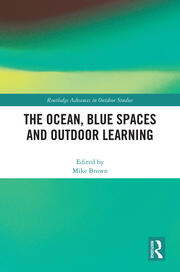
This book explores the educational dimension of people’s engagement with the ocean. Across formal, informal, and nonformal learning contexts, it examines how experiences of the ocean and ‘blue spaces’ help us to understand ourselves, others, and our place within the natural environment, and the place of the ocean in our sociocultural and political life.
Drawing on creative projects from around the world, the book introduces topics as diverse as ocean sailing, migrants’ experiences of learning to surf, experiencing seascapes through sounds, and the importance of fostering connections with the sea. It provides examples of innovative teaching and learning practices, and the pedagogical possibilities that engagement with the ocean offers to outdoor studies scholars and practitioners in terms of education, and the enhancement of our well-being and the environment.
This is fascinating reading for advanced students, researchers, teachers, and educational practitioners with an interest in outdoor studies, experiential and outdoor learning, leisure and recreation studies, environmental studies, or geography.
https://www.routledge.com/The-Ocean-Blue-Spaces-and-Outdoor-Learning/Brown/p/book/9781032224114
Living with the sea: Knowledge, awareness and action
In a somewhat belated post I’m pleased to advise that this edited book, which found it’s genesis in the 2016 Seascapes conference, has been published. My thanks to my co-editor Kimberley Peters and the contributors.

Description
The seas and oceans are currently taking centre stage in academic study and public consciousness. From the plastics littering our seas, to the role of climate change on ocean currents from unequal access of marine resources to the treacherous experiences of seafarers who keep our global economy afloat; now is a crucial time to examine how we live with the sea.
This ambitious book brings together an interdisciplinary and international cohort of contributors from within and beyond academia. It offers a range and diversity of insights unlike previous collections. An ‘oceanic turn’ is taking place, with a burgeoning of academic work that takes seriously the place of seas and oceans in understanding socio-cultural and political life, past and present. Yet, there is a significant gap concerning the ways in which we engage with seas and oceans, with a will to enliven action and evoke change. This book explores these challenges, offering insights from spatial planning, architectural design, geography, educational studies, anthropology and cultural studies. An examination through these lenses can help us to better understand human relationships with the seas and oceans, and promote an ethic of care for the future.
 mikebrownsailing